
Currency
Singapore Dollar (SGD)
Expand into new global markets with one click. Tap to

Fast and compliant market entry. Hire top local talent without the need for a legal entity
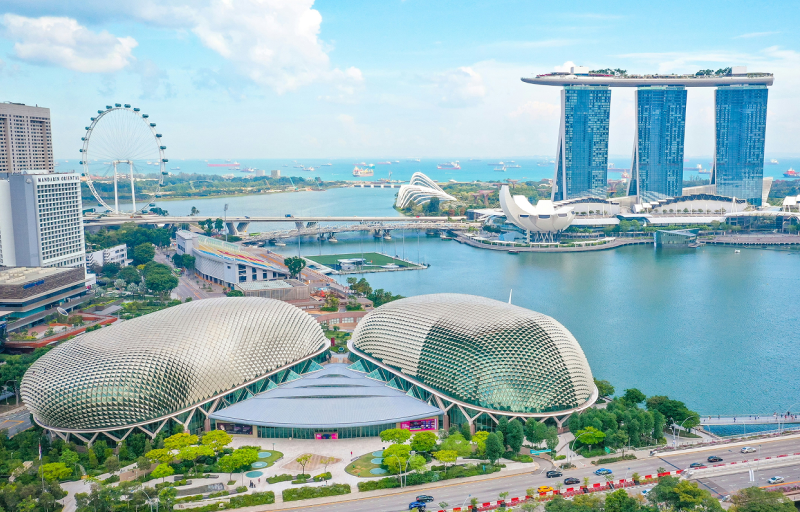
The Republic of Singapore, is a sovereign city-state in maritime Southeast Asia and the world’s most competitive economy, according to the World Economic Forum’s 2019 report. It also ranks highly on the United Nations’ Human Development Index and in the top 10 for per capita nominal GDP.
Key sources of employment law in Singapore include the Employment Act, common law, the Child Development Co-Savings Act, the Employment of Foreign Manpower Act, the Work Injury Compensation Act, and the Workplace Safety and Health Act. These laws provide strong protections for employees, making employment in Singapore a significant investment.
In addition to the public health system, 90% of employers in Singapore offer supplemental health insurance, providing employees with access to a broader range of providers, specialists, and shorter wait times.
Skills Development Levy (SDL): Up to 0.25%
CPF (Pension): 9% – 17%
Total Employer Contribution: Up to 17.25%
CPF (Pension): 7.5% – 20%
Total Employee Contribution: 7.5% – 20%
Up to $20,000: 0%
$20,000 – $30,000: 2%
$30,000 – $40,000: 3.5%
$40,000 – $80,000: 7%
$80,000 – $120,000: 11.5%
$120,000 – $160,000: 15%
$160,000 – $200,000: 18%
$200,000 – $240,000: 19%
Above $240,000: 19.5%
All full-time workers in Singapore are legally entitled to a minimum of seven days of annual leave after completing three consecutive months of employment with a company. After that, one additional day is added each year, up to 14 days of annual leave after completing seven years of service. However, it is common for employees to receive 14 to 20 days of annual leave. In addition to annual leave, full-time employees are entitled to 11 paid public holidays each year.
Expecting mothers are entitled to 16 weeks of maternity leave provided they have been employed for at least three months prior to giving birth, and the child is a Singapore citizen. Companies are not allowed to terminate employment during this period. For the first two children, the first 8 weeks of maternity leave are paid by the employer, and the remaining leave is reimbursed by the government. For the third child onward, all 16 weeks of maternity leave are reimbursed by the government. If the child is not a Singapore citizen, the maternity leave is 12 weeks.
Fathers are entitled to two weeks of paternity leave in Singapore. To qualify for government-paid paternity leave, the child must be a Singapore citizen, and the father must be legally married to the mother between the conception and birth of the child. Paternity leave also applies if the child is adopted, as long as the child is a Singapore citizen. Managers earning more than SGD 4,500 per month are subject to specific terms in their employment contract regarding paternity leave.
Work Related Injury Leave: Employers are required to cover the costs of work-related injuries through either direct compensation or insurance. Under the Work Injury Compensation Act (WICA), an employee must receive 100% of their average monthly earnings for the 12 months prior to the injury for the first 14 days of injury-related leave, if not hospitalized. After 14 days, the employee will receive 66.7% of their average monthly earnings. Starting from September 1, 2020, all work-related medical leave must be reported to the Ministry of Manpower. Additionally, as of January 1, 2021, all WICA insurance policies must be issued by a designated insurer and comply with the Ministry of Manpower’s mandatory terms.
Under Singapore’s Employment Act, either the employer or the employee can give notice to terminate the employment contract.
The statutory notice period in Singapore is based on the length of the employee’s service:
1 day of notice for employment less than 26 weeks
1 week of notice for employment between 26 weeks and 2 years
2 weeks of notice for employment between 2 years and 5 years
4 weeks of notice for employment of 5 years or more
Probation periods are not mandatory in Singapore, but it is common for companies to set probation periods ranging from three to six months.